Let’s talk about bones
Health & Science Feature – Varrock Street Journal
Not the Halloween kind, or the kind your dog buries in the backyard — we’re talking about your bones. The ones holding you up right now. Most of us don’t give them much thought… until they start to crack, shrink, or break. But what if we could rebuild them? That’s the promise behind one of the most exciting new studies in modern medicine.
What Is Osteoporosis? And Who Does It Affect?
Osteoporosis is a disease where bones become weak, porous, and more likely to fracture, often from minor falls or even everyday movements. It’s sometimes called the “silent disease” because most people don’t know they have it until they suffer a broken bone — usually in the hip, spine, or wrist.
In the U.S. alone:
- Over 10 million Americans have osteoporosis
- Another 44 million have low bone density (osteopenia)
- 1 in 2 women and 1 in 4 men over age 50 will break a bone due to osteoporosis
It’s not just a matter of inconvenience. Hip fractures in older adults can lead to serious disability, loss of independence, or death within a year. And yet, current treatments mostly slow down bone loss, rather than rebuild strong, healthy bone.
That’s where this new research could be a game-changer.
Here is a short video describing what osteoporosis.
What Did the Research Discover?
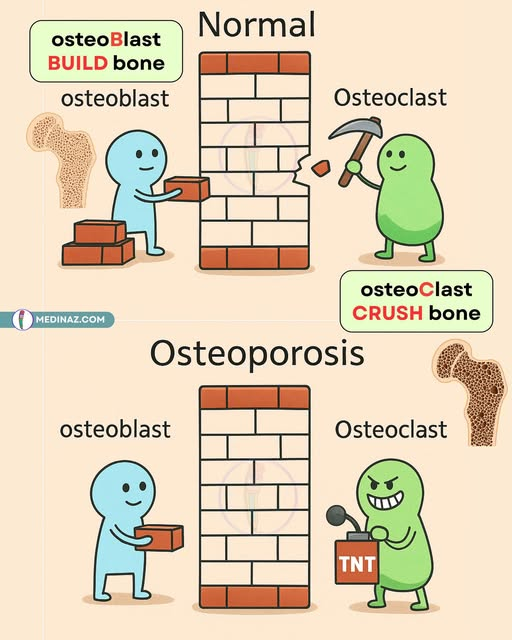
Scientists at the Children's Medical Research Institute in Australia identified a molecular “brake” in bone-forming cells (osteoblasts) — a protein called CDK8 that limits bone-building activity. Using a new drug-like molecule called IC15, they were able to block CDK8 and supercharge the body’s ability to form stronger bones.
In animal models, this led to:
- Stronger, denser bone formation
- Improved bone structure, even in conditions that mimicked osteoporosis
- No signs of off-target effects or cancerous growth
Most existing osteoporosis treatments focus on slowing bone destruction (resorption) — but IC15 takes the opposite approach: stimulate active bone regeneration, offering a whole new treatment pathway.
Why This Matters
We’re entering an era where populations are aging faster than ever. Osteoporosis is already one of the leading causes of disability in older adults, and the number of fractures is expected to double by 2040. That comes with massive human and financial costs — hospital stays, surgeries, loss of mobility, and long-term care.
If this new treatment can be safely applied to humans, it could:
- Prevent debilitating fractures in older adults
- Restore strength and independence
- Cut healthcare costs dramatically
- Change how we approach bone health as part of aging
It’s also a powerful example of how basic cellular research can uncover brand-new strategies to fight diseases that were once seen as inevitable.
Here is a great podcast episode discussing what you can start doing to help protect your bones now to help reduce the risk of osteoporosis!
Spotlight on Future Applications
This research is still in the preclinical phase, but it lays the foundation for:
- Human clinical trials of CDK8 inhibitors
- Development of next-generation bone-strengthening drugs
- Earlier intervention strategies for at-risk adults
- Broader applications in other degenerative or age-related conditions
It also opens up the conversation about regenerative medicine for aging, not just for bones, but possibly for other systems like muscles, cartilage, or brain tissue.
Reflection Questions
- If we could reverse bone loss in older adults, how might that change what “aging well” looks like?
- Should we begin screening for bone density earlier in life?
- How do we ensure new treatments like this remain accessible — not just to the wealthy, but to everyone?
📚 Sources
- https://www.facebook.com/medinazacademy
- Xu, Y. et al. (2025). CDK8 inhibition triggers bone anabolic responses via enhancement of osteoblast function. Signal Transduction and Targeted Therapy, Nature. https://www.nature.com/articles/s41392-025-02291-y
- Wood, C. (2025). New Breakthrough to Strengthen Bones Could Reverse Osteoporosis. ScienceAlert. https://www.sciencealert.com/new-breakthrough-to-strengthen-bones-could-reverse-osteoporosis